

Dental fear is one of the most widespread yet least talked-about health challenges in the world. Studies suggest that anywhere from 9 to 20 percent of people in developed countries avoid the dentist entirely because of fear or anxiety. For some, it’s a mild sense of dread before an appointment. For others, it’s a full-blown phobia, a paralyzing condition that keeps them from seeking care for years, sometimes decades. Either way, the consequences for oral and overall health can be serious.
The good news? Dental anxiety is highly manageable. With the right strategies, mindset shifts, and support from a compassionate dental team, even the most nervous patients can get the care they need, and sometimes even stop dreading it altogether.
Understanding Why Dental Fear Happens
Before tackling dental anxiety, it helps to understand where it comes from. For many people, it begins with a painful or distressing experience in childhood, an unexpected procedure, an unsympathetic dentist, or simply feeling out of control in the chair. Others develop fear secondhand, absorbing the anxieties of parents or siblings. Some are triggered by specific elements: the sound of the drill, the smell of the clinic, the sensation of numbness, or even just lying back in a reclined position.
In more serious cases, dental phobia, classified as a specific phobia, can cause panic attacks, nausea, and the complete avoidance of dental care. Recognizing that your fear has a root cause, and that it is a legitimate psychological response rather than a personal weakness, is the critical first step toward overcoming it.
1. Find the Right Dentist
Not all dental practices are created equal when it comes to patient comfort. Seeking out a dentist who specializes in treating anxious patients, sometimes advertised as “gentle dentistry” or “anxiety-friendly dental care,” can make an enormous difference. During your first call or visit, pay attention to how the staff communicates. Do they listen? Do they explain procedures clearly? Do they take your concerns seriously?
Establishing trust with your dental provider is foundational. When you feel safe and respected, anxiety naturally begins to ease.
2. Communicate Openly and Honestly
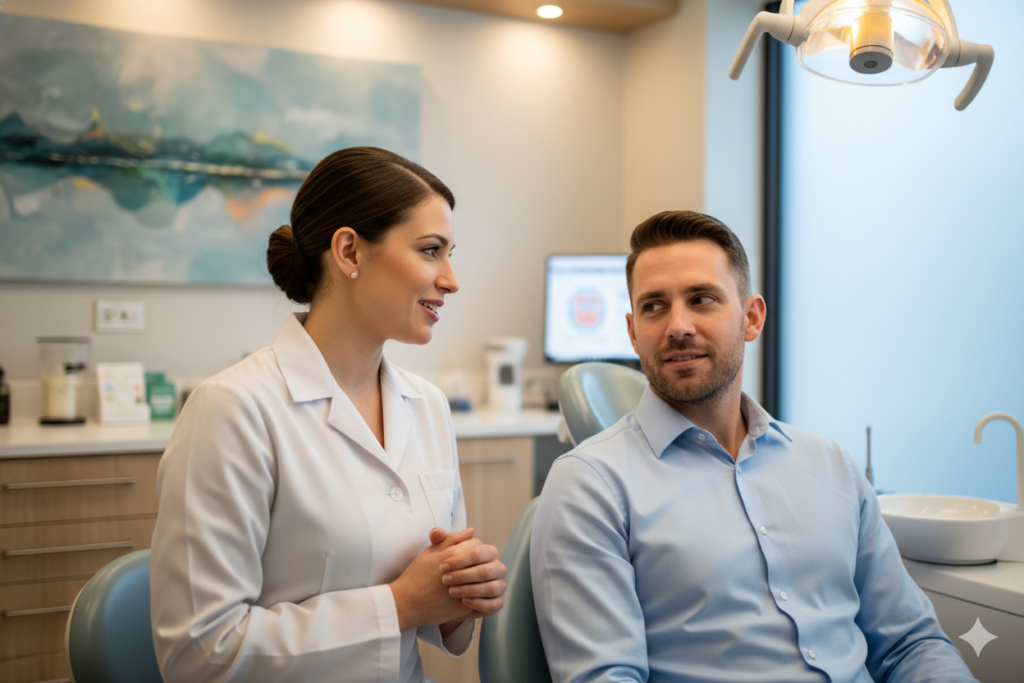
One of the most powerful tools you have is your voice. Tell your dentist, before the appointment begins, that you experience anxiety. A good dental team will adjust their approach accordingly: slowing down, narrating each step before doing it, and checking in regularly throughout the procedure.
Many dentists also offer a simple stop signal, such as raising your hand, that gives patients a sense of control during treatment. Knowing you can pause at any moment dramatically reduces the feeling of helplessness that fuels so much dental fear.
3. Use Relaxation Techniques
Simple breathing exercises can be remarkably effective in managing anxiety in the dental chair. Try box breathing: inhale for four counts, hold for four, exhale for four, hold for four. Repeat. This activates the parasympathetic nervous system and physically calms the body’s stress response.
Progressive muscle relaxation, deliberately tensing and releasing muscle groups starting from your feet upward, is another technique that works well in clinical settings. Some patients find that listening to music, audiobooks, or guided meditation through earbuds helps them mentally detach from the environment and stay calm throughout treatment.
4. Consider Sedation Options
For those with moderate to severe dental anxiety, sedation dentistry is a legitimate and widely available option. Depending on the level of anxiety and the complexity of the procedure, options include:
- Nitrous oxide (laughing gas): A mild sedative inhaled through a small mask. It induces a relaxed, slightly euphoric state while keeping you fully conscious. The effects wear off quickly after the mask is removed.
- Oral sedation: A prescribed anti-anxiety medication taken before the appointment. You remain awake but deeply relaxed.
- IV sedation: Administered intravenously for deeper sedation, often used for complex procedures or severe phobia cases.
Talk to your dentist about which option, if any, might be appropriate for your situation.
5. Take It One Step at a Time
If you’ve avoided the dentist for years, the idea of jumping straight into a full treatment plan can feel overwhelming. Instead, consider scheduling a no-treatment consultation first, simply visiting the practice, meeting the team, and sitting in the chair without any procedures taking place. Gradual exposure, taken at your own pace, is one of the most evidence-backed approaches to reducing phobias over time.
Celebrate small wins. Showing up is an achievement. Getting through a check-up is an achievement. Progress, however incremental, builds confidence.
6. Address the Psychological Root
For those whose fear is deeply entrenched, working with a therapist or psychologist can be transformative. Cognitive Behavioural Therapy (CBT) is particularly effective for dental phobia, it helps patients identify and reframe the distorted thoughts that drive avoidance behaviour. Techniques like systematic desensitization gradually expose patients to dental-related stimuli in a controlled, low-stress environment until the trigger loses its power.
Some areas also have specialist dental anxiety clinics where dentists and mental health professionals work together to support highly anxious patients through treatment.
The Cost of Avoidance
Avoiding the dentist doesn’t make dental problems disappear; it allows them to worsen. A small cavity becomes a root canal. Gum disease progresses silently. What could have been a quick, inexpensive fix becomes a lengthy, costly procedure. Ironically, dental avoidance driven by fear of pain or discomfort almost always leads to more pain and discomfort down the line.
You Are Not Alone – and You Don’t Have to Stay Stuck
Millions of people share your fear. Dentistry has evolved enormously; today’s techniques are faster, quieter, and far more comfortable than those of even a decade ago. With the right support system, the right provider, and a commitment to taking small steps forward, dental anxiety can be overcome. Your oral health and your overall well-being are worth fighting for.
